
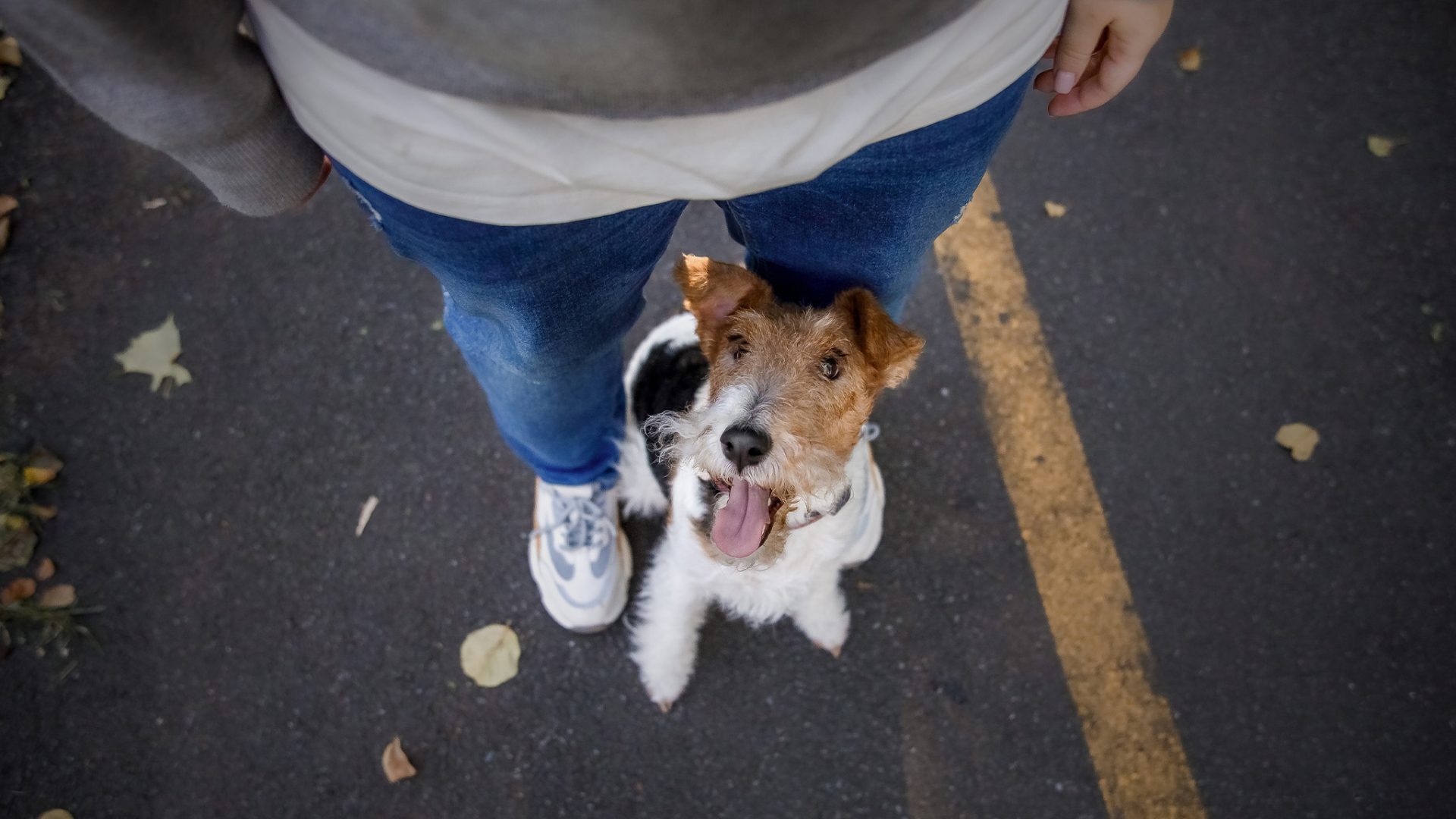
In July, an evening walk can happen after dinner and still feel like the middle of the day. By October, that exact same walk may start under streetlights.
Nothing about your neighborhood has necessarily changed, but the experience of walking through it can feel completely different once the sun starts setting earlier.
For dogs, reduced visibility can make familiar surroundings feel less predictable. For people, it means paying closer attention to traffic, bikes, sidewalk conditions, and what is happening just outside the range of a streetlight. Add Chicago’s busy intersections, changing weather, fall leaves, construction, and evening crowds, and a routine walk can suddenly require a little more planning.
That does not mean nighttime walks need to feel stressful. A few thoughtful adjustments can help keep them safe, comfortable, and enjoyable for both you and your dog.
The Same Route Can Feel Different After Dark
Dogs experience the world through much more than sight, but visibility still changes the way a walk feels.
A person standing near a bus stop may look different in shadow. A garbage bag moving in the wind may suddenly deserve a full investigation. Bikes and scooters can seem to appear more quickly when they are harder to see approaching.
Some dogs barely notice the difference. Others become more alert once familiar landmarks are less visible.
If your dog seems more cautious after dark, there is no need to rush them through the walk. Give them time to look, sniff, and understand what is around them. A route they know well during daylight may simply require a little more processing once the lighting changes.
This is especially true for dogs who are naturally cautious or sensitive to sudden movement. Familiar caregivers can help because they already know what is normal for that particular dog. We talk more about that in Why Familiar Caregivers Matter for Anxious or Shy Pets.
Visibility Matters for Both Ends of the Leash
Being able to see your dog is important, but being seen by everyone else matters just as much.
Reflective collars, harnesses, leashes, or clip-on lights can make dogs easier for drivers, cyclists, and other pedestrians to notice. Light colored clothing or reflective details on the person walking the dog can help too.
You do not need to turn your dog into a mobile light display. The goal is simply to make both of you easier to spot.
This becomes particularly important at intersections, driveways, alleys, and parking garage exits, where cars may be turning across the sidewalk.
Chicago neighborhoods can stay busy well into the evening. A residential block may feel quiet one minute and suddenly have a delivery driver, bike, dog walker, and car all arriving at the same corner.
A little extra visibility gives everyone more time to react.
Familiar Intersections Deserve More Attention at Night
An intersection you cross every day can require different judgment after sunset.
Drivers may have more difficulty seeing pedestrians. Headlights can create glare. Cyclists and scooters may be harder to spot until they are relatively close, particularly if they are not well lit.
Instead of assuming a driver sees you, make eye contact when possible and give yourself extra time before crossing.
If your usual route includes a particularly busy intersection, nighttime may also be a good reason to choose a quieter alternative.
A slightly longer route with better lighting and fewer complicated crossings can sometimes be the easier walk.
That is part of what experienced Chicago dog walkers learn over time. The best route is not always the shortest one. It is the route that makes sense for the dog, the conditions, and what is happening in the neighborhood that day.
Sidewalk Hazards Become Harder to Spot
Chicago sidewalks already require a certain amount of attention in daylight.
Once it gets dark, uneven pavement, curbs, tree roots, construction debris, broken glass, food scraps, and other hazards can be much harder to see.
Fall adds another layer. Leaves can cover holes, slick spots, or objects you would normally notice immediately.
Dogs, of course, are perfectly capable of discovering something on the sidewalk before you do, particularly when that something smells interesting.
Keeping walks a little more controlled in poorly lit areas gives you more time to see what your dog is approaching. A small flashlight or phone light can also be useful when you need a closer look at the sidewalk or grass.
This is not about turning every evening walk into a hazard inspection. It is simply about recognizing that reduced visibility changes what you can notice before your dog does.
Busy Neighborhoods Have Their Own Nighttime Rhythm
Chicago does not exactly shut down when the sun sets.
Different neighborhoods have different evening rhythms, and those patterns can affect the walk.
In Wrigleyville, game days may bring crowds and heavier traffic well into the evening. Parts of Wicker Park, Logan Square, and Old Town can stay active with restaurants, nightlife, and pedestrians. Other residential areas may become significantly quieter once commuters are home.
Dogs notice those shifts.
A dog that is comfortable walking through a busy commercial area at 2 p.m. may find it more stimulating at 8 p.m. when groups of people are moving between restaurants or standing outside venues.
There is nothing wrong with changing the route to match the time of day.
Professional walkers do this routinely. A quieter residential street may be a better choice for one dog, while another is perfectly comfortable following the usual route.
Local knowledge becomes valuable because the walker is not simply following directions on a map. They understand how the neighborhood actually behaves at different times.
Your Dog May Need a Little More Space
Reduced visibility can make encounters between dogs trickier too.
During daylight, you may see another dog half a block away and have plenty of time to decide whether to cross the street. At night, you may not notice them until they are much closer.
If your dog prefers space around unfamiliar dogs, build that into the walk proactively.
Stay aware of corners, building entrances, parked cars, and other places where dogs can suddenly appear. Keeping a little more distance gives both dogs room to move comfortably.
The same principle applies to people.
Not every dog enjoys surprise greetings, and darkness is not the best time to test whether yours has suddenly changed their mind about strangers reaching toward them.
Routine Still Matters When the Clock Changes
When sunset shifts earlier, walk times often shift too.
A dog who spent summer enjoying a bright 7 p.m. walk may suddenly find that the same outing happens in complete darkness. Some pet parents move that walk earlier, while others keep the schedule and adapt the route.
There is no single correct answer.
What matters is maintaining a routine that works for your dog while adjusting to the season.
For apartment dogs in particular, outdoor trips are built into the structure of the day rather than happening whenever a backyard is available. Our article How Apartment Living Shapes Your Dog’s Daily Routine looks more closely at why those scheduled outings become such an important part of urban dog life.
If work or commuting makes earlier walks difficult, having a dependable dog walker can help preserve that rhythm even as daylight hours change.
A Familiar Dog Walker Can Make Seasonal Transitions Easier
One of the benefits of working with a regular dog walker is that they get to know more than your dog.
They learn the neighborhood too.
They know which streets are well lit, which intersections get busy, where construction has appeared, and which routes tend to be calmer after dark. More importantly, they know how your dog responds to those environments.
A great dog walker is constantly making small decisions that most pet parents may never think about. Is this route too crowded tonight? Is the dog unusually hesitant? Would a quieter street make the walk more comfortable? Does the weather call for a shorter outing?
Those decisions are part of professional care, and we explore them more fully in What Makes a Great Dog Walker?.
Fall Darkness Is Also a Good Reminder to Prepare for Winter
Earlier sunsets arrive before the coldest Chicago weather does, which makes fall a useful time to reassess your walking setup.
Check reflective gear. Make sure leashes and harnesses still fit properly. Find the flashlight that somehow disappeared sometime around March.
As temperatures continue to drop, nighttime walks will eventually bring additional considerations like ice, snow, wind, and sidewalk salt. Our guide to 6 Tips for Safe and Fun Winter Dog Walks can help when that part of the Chicago calendar arrives.
For now, the biggest adjustment is simply recognizing that less daylight changes the walk.
A Good Nighttime Walk Is Still a Good Walk
Dogs do not stop needing exercise, bathroom breaks, fresh air, and opportunities to explore just because the sun starts setting before dinner.
The evening walk can still be one of the best parts of the day.
It may simply require a little more awareness, better visibility, and a willingness to choose a different route when conditions call for it.
Chicago changes throughout the day, and good dog walking changes with it. The quiet block at noon may be busy at night, the familiar shortcut may be poorly lit, and the dog who confidently walks everywhere during daylight may appreciate a little extra patience once darkness settles in.
Thoughtful care means noticing those differences and adjusting accordingly.
If shorter days are making your dog’s walking schedule harder to manage, Chicago Pet Sitters can help maintain a consistent routine with familiar dog walkers who know your dog and the neighborhoods they walk every day.
