
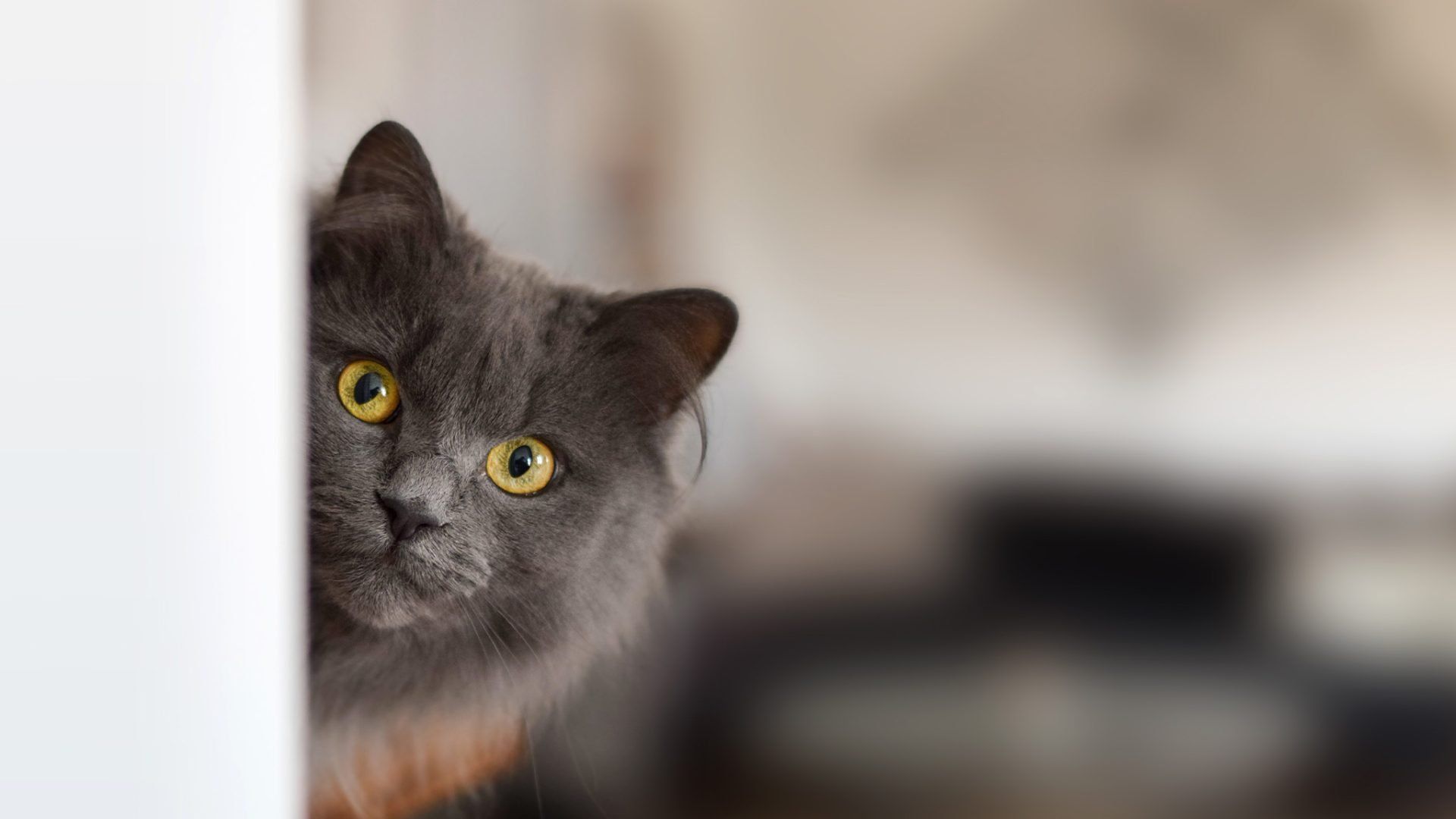
You stand up to get a glass of water. Your cat stands up too.
You walk into the bathroom. Apparently, this is now a group activity.
You move from the couch to the kitchen, and there they are again, following a few steps behind like a tiny supervisor who has serious concerns about your ability to complete basic household tasks alone.
If your indoor cat follows you from room to room, you are far from alone. Some cats are naturally more social than others, and following can be part of the way they interact with the people, routines, and spaces that make up their world.
Sometimes it is affection. Sometimes it is curiosity. Sometimes you have simply become associated with dinner.
Usually, it is a combination.
Your Cat May Simply Enjoy Being Near You
Cats have an unfair reputation for being aloof.
In reality, many cats actively seek social contact with the people they trust. That may look like curling up beside you, greeting you when you come home, sitting nearby while you work, or following you throughout the house.
Not every affectionate cat wants constant physical contact. Some prefer proximity.
They may not climb into your lap, but they want to occupy the chair next to yours. They may disappear when guests arrive but quietly follow you from the bedroom to the kitchen ten minutes later.
For these cats, following is simply one way of staying connected.
They know you. They are comfortable with you. And apparently whatever is happening in the laundry room deserves their personal attention.
Cats Are Very Good at Learning Your Routine
Indoor cats spend a lot of time observing the household’s rhythms.
They learn when you wake up. They know which cabinet contains breakfast. They recognize the sequence of events that happens before you leave for work and, more importantly, the sequence that usually ends with a treat.
Over time, your movements become useful information.
If walking toward the kitchen often leads to food, your cat may follow. If sitting at your desk usually means several quiet hours together, they may settle nearby. If heading toward the bedroom signals bedtime, your cat may get there before you do.
This is one reason a cat can appear to know exactly what you are doing before you have fully decided to do it yourself.
They are not reading your mind. They have simply been paying much closer attention to your routine than you probably realized.
Cats tend to value consistency in their environment and daily life, which is one reason predictable routines can be so comforting to them. citeturn678283search0
Sometimes, You Are the Most Interesting Thing in the Room
Indoor cats have a relatively contained world.
That does not mean it is boring, but it does mean your activity can become part of their enrichment.
Opening a closet? Interesting.
Changing the sheets? Extremely interesting.
Bringing home a grocery bag? Potentially life-changing.
Walking into a room that has been available to them all day but suddenly contains you? Worth investigating immediately.
Following you gives your cat new sights, sounds, smells, and little changes to explore. It can be a form of curiosity as much as affection.
This is especially true for cats that like to monitor household activity from a comfortable distance. They may not need to participate in everything, but they’d still like to know what is going on.
They May Have Learned That Following You Pays Off
Cats are excellent at connecting behavior with results.
If following you into the kitchen occasionally results in food, following you into the kitchen becomes a pretty reasonable strategy.
The same thing can happen with attention.
Maybe your cat follows you into the bedroom, and you automatically give them a few scratches. Maybe they walk into your office, and you stop to talk to them. Maybe trailing you down the hall eventually turns into playtime.
Those small interactions reinforce the behavior.
This does not mean you have accidentally created a problem. It simply means your cat has learned that staying close to you often leads to something they enjoy.
Attention, affection, play, and food can all reinforce behaviors that cats use to communicate with us. citeturn678283search3turn678283search4
Following Can Be Part of Their Daily Social Routine
For some cats, following is less about getting something and more about participating in the household.
They may trail you during your morning routine, disappear for several hours of serious napping, then reappear when work ends or dinner preparation begins.
That pattern becomes part of their day.
This is one reason indoor cats can benefit from predictable interaction and enrichment. Their social world may revolve heavily around the people in the home.
Our article How to Keep Indoor Cats Mentally Stimulated During Cold Months explores ways to add play, exploration, and variety to an indoor cat’s routine when their environment starts feeling a little too predictable.
What If You Have More Than One Cat?
Things get more interesting in a multi-cat home.
One cat may follow you everywhere while another appears only when food is involved. A third may wait until the more confident cat leaves before approaching for attention.
That does not necessarily mean one cat loves you more.
Cats have different personalities, comfort levels, and ways of interacting. Some want to be involved in everything. Others prefer quieter, more selective social time.
Resource sharing and relationships between cats can also influence when and how they approach people.
If you share your home with several cats, How to Keep the Peace in a Multi-Cat Household looks at how individual space, resources, routines, and attention can help everyone feel comfortable.
Why Does My Cat Follow the Pet Sitter Too?
This one sometimes surprises people.
A cat who usually follows their person may eventually start doing the same thing with a familiar pet sitter.
It makes sense when you think about it.
The sitter arrives and predictable things happen. Food gets prepared. The litter box gets cleaned. Playtime may begin. There may be treats, brushing, conversation, or the highly respected chin scratches.
Over repeated visits, the caregiver becomes part of the routine.
Some cats warm up almost immediately. Others may spend the first several visits observing from another room before deciding this person is worth investigating.
That is one reason familiar caregivers can be especially valuable for cats. They have time to learn the cat’s preferences, and the cat has time to learn what to expect from them.
Our article Why Familiar Caregivers Matter for Anxious or Shy Pets goes deeper into why those consistent relationships can help more reserved pets feel comfortable.
Your Cat May Also Be Looking for Something to Do
Sometimes a little shadowing is simply a clue that your cat would enjoy more interaction.
Maybe following you ends in a play session. Maybe they repeatedly appear when you are moving around the house because movement itself is interesting.
This does not mean every cat that follows you is bored.
Look at the bigger picture.
Does your cat have regular opportunities for play? Places to climb or perch? Windows to watch? Toys or activities that encourage exploration? Do they get predictable social interaction during the day?
If those needs are being met and your cat still follows you everywhere, congratulations. You may simply have a very committed assistant.
Cat behavior can also be surprisingly expressive in other ways. If yours has a habit of suddenly sprinting through the house at full speed, our guide to Cat Zoomies, Explained may answer another question you have probably asked at least once.
When a Sudden Change Is Worth Paying Attention To
There is an important difference between a cat who has always followed you and a cat who suddenly starts doing it much more than usual.
Behavior changes can happen for many reasons, and not every change signals a problem. Still, your cat’s normal behavior provides a useful baseline.
Pay attention if increased following is accompanied by other noticeable changes, such as:
- Changes in appetite or drinking
- Different litter box habits
- Unusual vocalization
- Restlessness
- Changes in sleep
- Hiding more or less than normal
- A significant change in energy or personality
Rather than trying to diagnose the reason yourself, consider discussing a meaningful or persistent behavior change with your veterinarian.
The key is not to worry every time your cat follows you into the bathroom. It is simply to know your cat well enough to recognize when their usual habits change.
Sometimes Your Cat Just Likes Your Company
There does not have to be a complicated explanation.
Your cat may follow you because you are familiar. You are part of their routine. Interesting things tend to happen around you. And, yes, there is always the possibility that you are walking toward the food.
Indoor cats build rich little lives around the people, spaces, and patterns they know.
For some, being close means sitting on your lap. For others, it means quietly occupying the same room. And for a certain type of cat, it means escorting you everywhere in your own home as though you require supervision.
If your cat enjoys familiar company while you are home, that same sense of consistency can matter when you travel. Chicago Pet Sitters provides in-home cat care from professional caregivers who take the time to learn each cat’s routine, personality, and preferred level of interaction.
